
Prophetic Feed
Browse recent prophetic words and updates from the community.
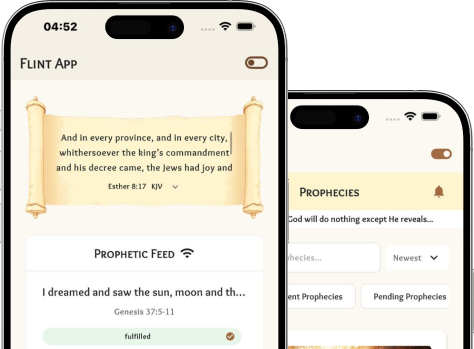
Browse recent prophetic words and updates from the community.
Highlight key prophetic moments and featured messages.
Explore mysteries and deeper insights into realities of life.
God spoke to Rebekah during a difficult pregnancy, declaring, “Two nations are in thy womb, and two manner of people shall be separated from thy bowels... and the elder shall serve the younger” (Genesis 25:23). As the children struggled within her, Rebekah did not rely on her own understanding but went to enquire of the Lord. God revealed that what she carried was far greater than two unborn children. It was the beginning of two nations and the unfolding of His covenant purpose through Jacob rather than Esau. The prophecy unfolded exactly as God had spoken. Jacob and Esau were born with contrasting destinies, and over time they became the fathers of Israel and Edom. What seemed like an ordinary pregnancy was actually carrying a future that would shape generations. The struggle within Rebekah was not meaningless; it reflected the significance of what God had placed inside her. Before either child had done good or evil, God declared His sovereign purpose, showing that His plans are established by His calling and not by human expectations alone. The account also teaches the importance of seeking God rather than manipulating His promises. Although God's word was certain, later attempts by Rebekah and Jacob to force its fulfilment brought unnecessary pain and division. God's purposes never require human deception to succeed; He is fully able to accomplish what He has spoken in His own time and way. A present-day reflection: This passage reminds believers that God often places purposes, callings, and visions within His people long before they become visible. Like Rebekah, we may experience seasons of inward struggle as God forms what He intends to bring forth. The answer is not frustration or human striving, but to seek the Lord in prayer, receive His wisdom, and faithfully carry what He has entrusted to us. Every God-given vision has an appointed time. Our responsibility is to nurture it through obedience, perseverance, and prayer until it is brought to birth, resisting the temptation to force what only God can fulfil.
Jesus gave a solemn warning to His disciples, saying simply, “Remember Lot's wife” (Luke 17:32). He spoke these words while teaching about His return, pointing back to the destruction of Sodom and Gomorrah as an example of how suddenly God's judgment can come. In the days of Lot, life continued as normal until God sent messengers to warn Lot to flee the city. The instruction was urgent: leave immediately and do not look back. Yet Lot's wife looked back longingly toward what God was judging and became a lasting example of disobedience. The destruction of Sodom fulfilled exactly what God had declared. Despite Abraham's intercession, the city's persistent wickedness reached its full measure, and judgment came. Yet in the midst of judgment, God remembered His mercy, delivering Lot and his household before the city was destroyed. The account reveals both God's justice against unrepentant evil and His faithfulness to preserve those who respond to His warning. Jesus deliberately brought this historical event into the context of the last days. Just as people in Sodom continued with ordinary life until judgment came, He warned that His return would likewise come unexpectedly. His command to "Remember Lot's wife" is therefore more than a reference to the past—it is a call to wholehearted obedience, urging His followers not to cling to a world from which God is calling them to depart. A present-day reflection: Jesus' warning remains deeply relevant today. As the world moves further from God's ways, believers are called to separate themselves from persistent wickedness and respond promptly to God's voice. The lesson is not merely to leave places of judgment, but to leave behind every attachment that competes with obedience to God and His word. Like Noah's generation and Lot's family, we are called to live with readiness, refusing to look back, and pressing forward toward the salvation and kingdom that God has prepared.
God said to Abraham concerning Sarah, “I will bless her, and give thee a son also of her... she shall be a mother of nations; kings of people shall be of her” (Genesis 17:16). Though both Abraham and Sarah were advanced in age and far beyond the natural ability to have children, God declared that His covenant would be established through the son He Himself had promised. He even appointed the time, saying that Sarah would bear Isaac within the following year, demonstrating that God's promises are governed by His timing, not human possibility. The prophecy unfolded exactly as God had spoken. Despite the impossibility of the circumstances, Sarah conceived and gave birth to Isaac at the appointed time (Genesis 21:1–7). What seemed impossible by human reasoning became undeniable evidence that God is faithful to fulfill every word He speaks. Isaac's birth was not merely the answer to a family's longing, but the continuation of the covenant through which God would raise a nation and ultimately bring blessing to all the families of the earth. This promise also teaches an important lesson about waiting on God. Before Isaac's birth, Abraham and Sarah attempted to fulfil God's promise through human effort with Hagar and Ishmael. Yet God made it clear that His covenant would come through the son He had promised, not through human schemes. The fulfilment therefore reveals both God's faithfulness and the importance of trusting His appointed way. A present-day reflection: This passage reminds believers that God's promises are not limited by human circumstances or natural impossibilities. The call is to trust His word, remain patient in seasons of waiting, and resist the temptation to manufacture what God has promised to provide. When God speaks, He also supplies the power, the timing, and the means to bring His promise to pass.
God established His covenant with Noah, declaring, “Neither shall all flesh be cut off any more by the waters of a flood; neither shall there any more be a flood to destroy the earth” (Genesis 9:11). As the sign of this everlasting covenant, He set the rainbow in the clouds, not as a reminder to humanity alone, but as a testimony of His own covenant faithfulness to every living creature. Though the flood had revealed God's judgment against sin, the rainbow revealed His mercy and His commitment to not destroy the earth by flood anymore. From that day onward, the continued order of creation—the cycle of seedtime and harvest, cold and heat, summer and winter—has stood as evidence of God's faithfulness (Genesis 8:22). While local floods and natural disasters continue, the earth has never again been destroyed by a universal flood, exactly as God declared. The rainbow remains a visible witness that God's promises endure from generation to generation. This covenant does not remove humanity's accountability before God. The same God who promised never again to judge the world by water also continues to call people to righteousness and obedience. Later Scripture reveals that while the world will not again perish by flood, God has appointed a future day when He will judge the earth in another way, reminding us that His mercy and His justice always work together within His redemptive plan. A present-day reflection: The rainbow is more than a beautiful sign in the sky—it is a reminder of God's covenant faithfulness and enduring mercy. It calls believers to trust God's promises, value the life He has preserved, and steward His creation with gratitude and responsibility. Just as God remembered His covenant with Noah, we can rest in the assurance that every promise He has spoken will be fulfilled in His perfect time.
God said to Noah, “The end of all flesh is come before me… make thee an ark” (Genesis 6:13–22). The earth had become filled with violence, corruption, and wickedness, and God declared that judgment was imminent. Yet before judgment came, He revealed His plan of preservation, giving Noah detailed instructions to build an ark. The warning was not meant to produce panic, but preparation. Noah believed God, obeyed His voice, and built the means of salvation long before the first drop of rain fell. The prophecy unfolded exactly as God had spoken. As corruption increased, the ark was completed, Noah's family entered it, the animals were gathered, and the flood came upon the earth. While the world continued as normal, Noah responded in faith, demonstrating that obedience to God's word often requires acting before visible evidence appears. His preservation was not accidental—it was the result of trusting God's warning and following His instructions. Jesus later pointed back to Noah's generation, saying that the days before His coming would resemble the days before the flood, where people carried on with ordinary life, unaware until judgment arrived (Matthew 24:37–39). Hebrews likewise commends Noah's faith, declaring that “being warned of God of things not seen as yet, moved with fear, prepared an ark to the saving of his house” (Hebrews 11:7). The ark therefore becomes more than a historical vessel; it is a prophetic picture of God's provision of refuge before judgment. A present-day reflection: This passage reminds believers that God often provides a means of preservation before seasons of shaking. The call is not to live in fear, but to respond in faith—believing God's warnings, obeying His instructions without delay, and building the "ark" He directs for our generation. As violence, moral confusion, and spiritual darkness increase, the invitation remains the same: prepare while the door is open, call others to righteousness, and remain faithful until God brings His people safely through.
Through the fall of Adam and Eve, God spoke the first prophetic promise of redemption, declaring to the serpent, “I will put enmity between thee and the woman, and between thy seed and her seed; it shall bruise thy head, and thou shalt bruise his heel” (Genesis 3:15). Though spoken in the context of judgment, this was also a promise of hope. Evil would wound the promised Seed, but it would not have the final victory. The serpent's head would ultimately be crushed, signaling the defeat of sin, death, and the power of the devil. From that moment onward, the whole biblical narrative follows the line of this promised Seed. Through generations, covenants, and prophecies, God preserved the promise until its fulfillment in Christ. The New Testament presents Jesus' death and resurrection as the decisive victory over Satan, where the apparent defeat of the cross became the means by which the power of evil was broken. Yet Scripture also points to a future completion, when Satan will be finally crushed and God's victory fully revealed. This prophecy is therefore both the beginning of the gospel and the foundation of the Bible's story of redemption. It announces that although evil would wage war against God's people, it would never ultimately prevail. The promised Deliverer would suffer, triumph, and establish God's victory for all who belong to Him. A present-day reflection: This promise reminds believers that the conflict between God's kingdom and the kingdom of darkness continues, but the outcome has already been secured in Christ. The call is to remain steadfast, resist the devil, refuse agreement with sin, and walk in the victory Christ has won. Even when the battle is fierce, God's first promise still stands: the serpent's power is temporary, but the victory of the promised Seed is eternal.
Our dedicated support team is available to assist you with any inquiries or issues you may have. Feel free to contact us.